 Reviews



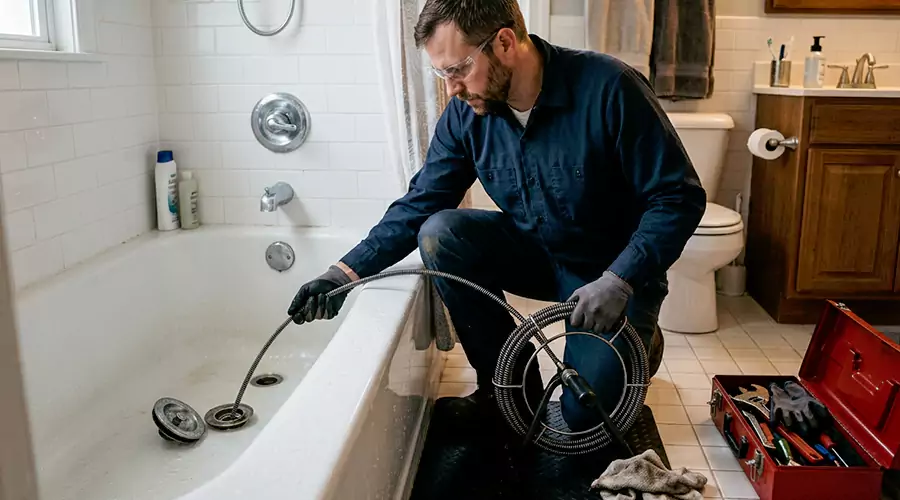
A clogged drain is properly fixed when the obstruction is removed and normal drainage remains consistent after testing. Repeated plunging may temporarily improve water flow without removing the underlying material. Professional clogged drain repair averages $246 in the United States according to August 2026 pricing data.
A lasting repair requires identifying why the blockage occurred and confirming that the drain can handle normal water flow afterward. This is particularly important when the same drain becomes slow again within days of an earlier clearing attempt.
Why Does a Drain Stay Clogged After Cleaning?
A drain can remain restricted when cleaning removes only part of the original obstruction. A narrow opening may allow water to pass temporarily while additional material stays attached to the pipe wall.
Several conditions can cause repeated clogging:
- Hair remains wrapped around a drain stopper.
- Grease continues coating kitchen plumbing.
- The P-trap still contains trapped debris.
- A deeper branch pipe has not been reached.
- A foreign object is lodged inside the pipe.
- The original blockage has shifted instead of being removed.
A temporary improvement should be treated as diagnostic information rather than proof of a complete repair.
How Can You Tell Whether the Clog Is Shallow or Deep?
A shallow clog often responds to cleaning directly beneath the fixture's drain opening. A deeper obstruction remains after that accessible area has been cleared. Symptoms affecting multiple fixtures suggest an even wider drainage problem.
| Condition | Likely Location | Next Diagnostic Step | Typical 2026 Cost |
|---|---|---|---|
| Visible debris | Drain opening | Remove material | Usually DIY |
| Continued slow flow | Trap area | Inspect accessible trap | Usually DIY |
| Clean trap with continued backup | Branch pipe | Manual auger | 147–352 for typical professional cleaning |
| Multiple affected fixtures | Shared drainage | Wider plumbing investigation | May cost more |
The professional cleaning figures represent reported U.S. costs for 2026. Actual charges depend on the blockage's location and severity.
What Warning Signs Indicate an Incomplete Repair?
A repaired drain should continue working during repeated normal use. A recurring slowdown or backup suggests that material remains or a different plumbing problem is present.
Signs to watch for include:
- The drain becomes slow again within a few days.
- Standing water returns under normal flow.
- The fixture continues gurgling after cleaning.
- Unpleasant odors remain.
- Plunging produces only temporary improvement.
- The same material repeatedly appears in the drain.
- A manual auger meets resistance at the same depth.
- Another fixture starts draining slowly.
- Water backs up when another appliance operates.
- Wastewater appears in a connected fixture.
The combination of repeated blockage and several affected fixtures is particularly important because it suggests that the problem may extend beyond the individual drain.
How Do You Diagnose a Recurring Drain Clog?
The most useful initial test compares drainage before and after cleaning the fixture's accessible components. This establishes whether the obstruction sits near the surface or farther into the pipe.
Follow this sequence:
- Remove visible debris from the drain opening.
- Clean the stopper or strainer.
- Test drainage with a small amount of water.
- Observe whether water flow improves.
- Inspect an accessible trap when appropriate.
- Test the drain again after reassembly.
- Record whether other fixtures show similar symptoms.
A drain that improves after surface cleaning probably contained at least some material near the opening. However, continued slow drainage indicates that more investigation is needed.
How Do You Fix a Clog That Keeps Returning?
A recurring clog should be approached by identifying what remains inside the drain rather than repeating the same clearing method. Mechanical removal is especially useful when hair or another physical obstruction is involved.
Begin by confirming that the fixture's stopper or strainer is clean.
Then select the next method according to the obstruction:
- Nearby soft blockage: Use a suitable plunger.
- Hair within easy reach: Use a flexible retrieval tool.
- Debris inside an accessible P-trap: Remove and clean the trap.
- Material farther into the branch pipe: Use a manual drain snake.
- Multiple affected fixtures: Stop treating the problem as an isolated clog.
This approach follows the principle of using the least aggressive method that reaches the actual obstruction.
Can a Damaged Drainpipe Cause Repeated Blockages?
A damaged drainpipe can contribute to recurring blockages when its internal condition prevents material from moving through normally. A restriction caused by pipe damage will not necessarily disappear after ordinary cleaning. Warning signs can include persistent problems in the same location despite repeated clearing. Another clue is an obstruction that returns without a clear change in what enters the fixture. Older plumbing can also contain accumulated deposits that make the available opening smaller. Because these conditions are not always visible from the fixture, repeated identical symptoms should be documented. Knowing which drains are affected helps narrow the location of the underlying problem.
What Should You Avoid When Fixing a Persistent Clog?
Repeated unsuccessful clearing attempts can create additional problems when excessive force or incompatible cleaning products are involved. A persistent clog needs diagnosis rather than progressively stronger improvised methods.
Avoid the following mistakes:
- Repeatedly adding chemical cleaner to standing water.
- Mixing different drain-opening products.
- Forcing a manual auger through rigid resistance.
- Ignoring leaks that develop after opening the P-trap.
- Assuming that one successful water release proves the drain is clear.
- Continuing to use several fixtures when wastewater is backing up elsewhere.
The CDC warns against mixing household cleaning chemicals because some combinations release dangerous vapors.
How Can You Test Whether the Drain Is Permanently Clear?
A successful drain repair should restore consistent performance under normal water flow. The test should reproduce ordinary use rather than rely on a small amount of water passing through the opening.
- For a sink, fill the basin partway and release the water.
- For a shower, run the water at its normal flow rate for several minutes.
- For a bathtub, confirm that it drains properly with its stopper mechanism installed.
- Observe the fixture again during subsequent use.
Testing is especially important after clearing a persistent clog because a narrow path through remaining material can create a misleading improvement.
When Should You Call a Professional?
Professional drain cleaning becomes appropriate when mechanical household methods cannot restore normal flow or the same clog repeatedly returns. Problems affecting several fixtures can indicate an obstruction farther into shared drainage piping.
Professional drain cleaning averages approximately $246 in the United States in 2026. Typical reported costs range from $147 to $352.
Professional diagnosis is appropriate when:
- The same blockage repeatedly returns after mechanical clearing.
- A manual auger cannot reach or remove the obstruction.
- Multiple household fixtures drain poorly.
- Wastewater returns through another plumbing fixture.
- The drainage pipe appears damaged.
- The source of the blockage cannot be identified safely.
A professional can investigate deeper piping and determine whether the issue requires additional cleaning or a different repair.
How Can You Prevent Another Clogged Drain?
Preventing recurring clogs requires reducing the material entering the fixture and addressing early signs of restricted drainage. Maintenance should focus on the actual cause rather than following the same routine for every drain.
Useful preventive measures include:
- Kitchen sinks: Keep cooking grease and food debris out of the drain.
- Bathroom sinks: Clean hair from the stopper regularly.
- Showers: Use a hair-catching drain screen.
- Bathtubs: Remove hair from the stopper assembly.
- Toilets: Flush only appropriate waste and toilet paper.
- All fixtures: Investigate persistent slow drainage before a complete blockage develops.
The EPA recommends keeping grease and other unsuitable materials out of drainage systems because they can contribute to plumbing and wastewater problems.
Conclusion
To fix a clogged drain, identify the material and location responsible for the blockage. Remove accessible debris before moving to deeper mechanical methods. Test the drain under normal operating conditions and watch for recurring symptoms. A blockage that repeatedly returns or affects several fixtures may need professional investigation. This week, check the fixture that has been causing trouble and address any early signs of slower drainage.
Frequently Asked Questions
Why does my drain keep clogging after I clean it?
Part of the obstruction may remain deeper inside the pipe. Existing buildup can then capture new material.
Can a plunger permanently fix a drain clog?
Yes, when it completely removes or dislodges the obstruction. A partial improvement may not last.
Why does my drain work briefly after snaking?
The cable may have opened a passage without removing all the material causing the restriction.
Can damaged plumbing cause recurring clogs?
Yes. Certain types of pipe damage can interfere with normal drainage and contribute to repeated restrictions.
How do I know if a clog is beyond the fixture?
A clean stopper and trap combined with continued backup suggest that the restriction is farther downstream.